Academic productions
PUCP Thesis 2020Intelligent spider robot for detecting anti-personnel metallic landmines in uneven terrain
Bachelor's Thesis and Professional Degree Thesis - Pontificia Universidad Católica del Perú (PUCP)
November 27th, 2020 - Lima, Peru
DOI: 20.500.12404/17649
For my bachelor’s and professional degree thesis, I took the spider robot that I had built one year earlier as an extracurricular project, and developed it into a larger and more capable robotic platform for landmine detection in irregular terrain. I redesigned and improved the mechanical structure while preserving the original geometry, with the same number of legs and degrees of freedom per leg.
The thesis design included the mechanical structure, the electronics, and the control of the robot. Keeping the same kinematic configuration was important because it allowed the walking algorithm developed for the original robot to be refined and transferred to the new design. I proposed an algorithm for controlling the joints and making the robot learn to walk using genetic algorithms and ensemble learning.
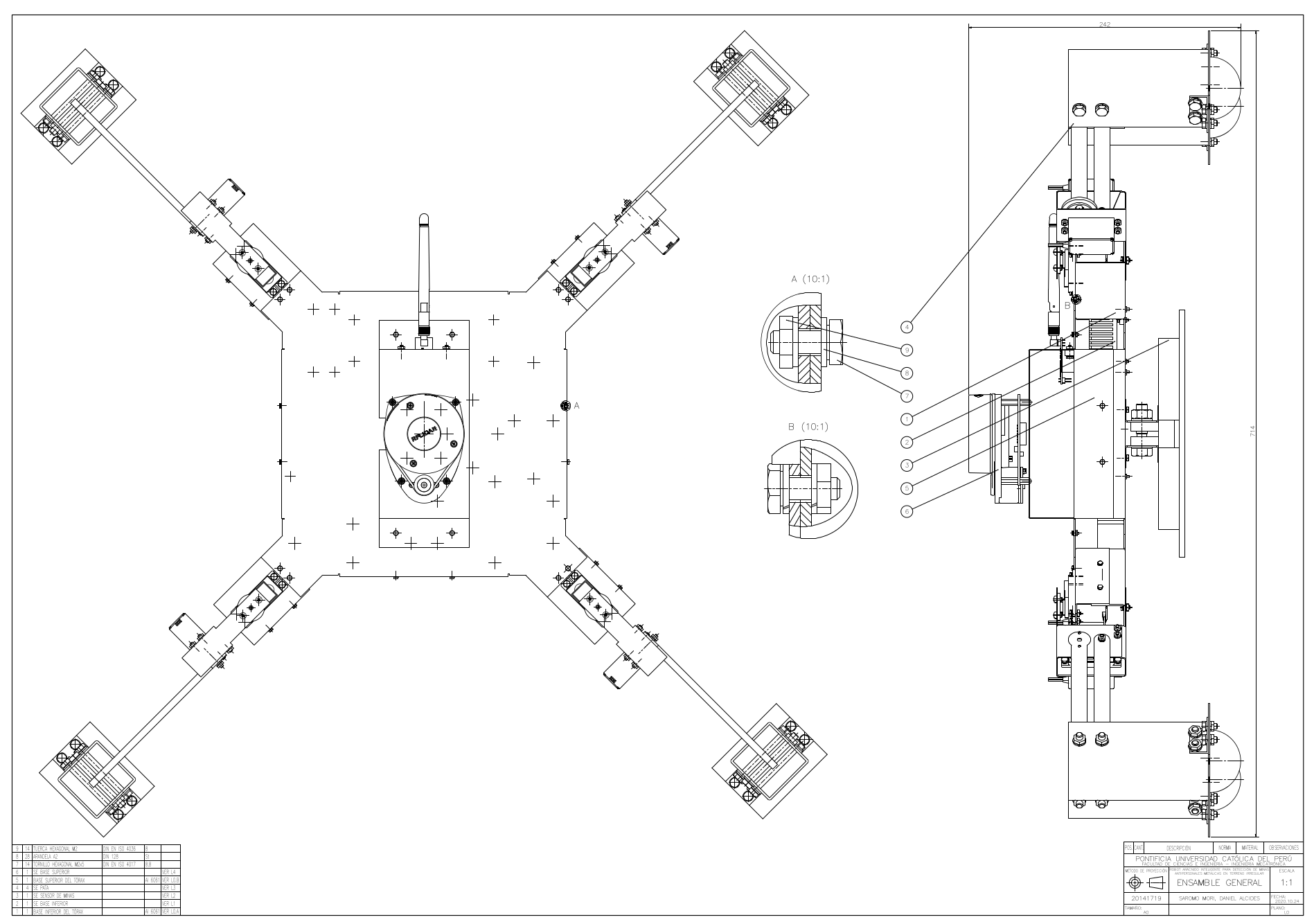
The project evolved from a scaled-down spider robot that I built in 2018. For my bachelor's thesis, I preserved its geometry and number of degrees of freedom while developing a larger robot intended to transport a landmine sensor over uneven terrain. Finally, I improved the gait-learning algorithm and documented the refined methodology in my thesis, using the original prototype again to experimentally validate it.
The proposed algorithm allows training an intelligent agent to maximize a reward metric without applying reinforcement learning techniques, which are usually the way to solve this type of problem.
The proposed control method combines genetic algorithms (GA) with supervised machine learning. Its operation can be understood in two stages: first, generating the training dataset, and then using that dataset to train a model that predicts the robot’s control commands.
During control, the machine-learning model receives the current sensor measurements (i.e., the sensor readings at the current time instant k), together with a short history of previous sensor measurements and actuator commands. In the diagram shown below, the previous N = 3 states are considered. Based on this temporal information, the trained model predicts the current actuator command ak. In other words, the model learns a mapping from the recent evolution of the robot’s state and previous actions to the actuator command that should be applied next.
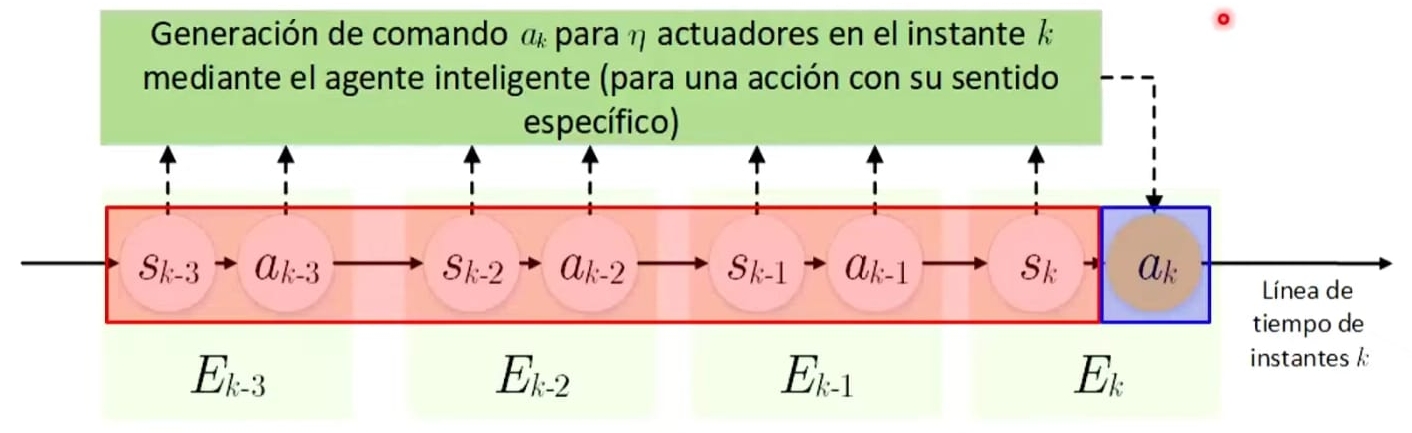
The key question is therefore how the training dataset is generated. For this purpose, I used a genetic algorithm to search for sequences of actuator commands that produce desirable robot behavior. Each candidate sequence is executed and evaluated using a fitness function, which converts the qualitative objective of the robot into a quantitative score.
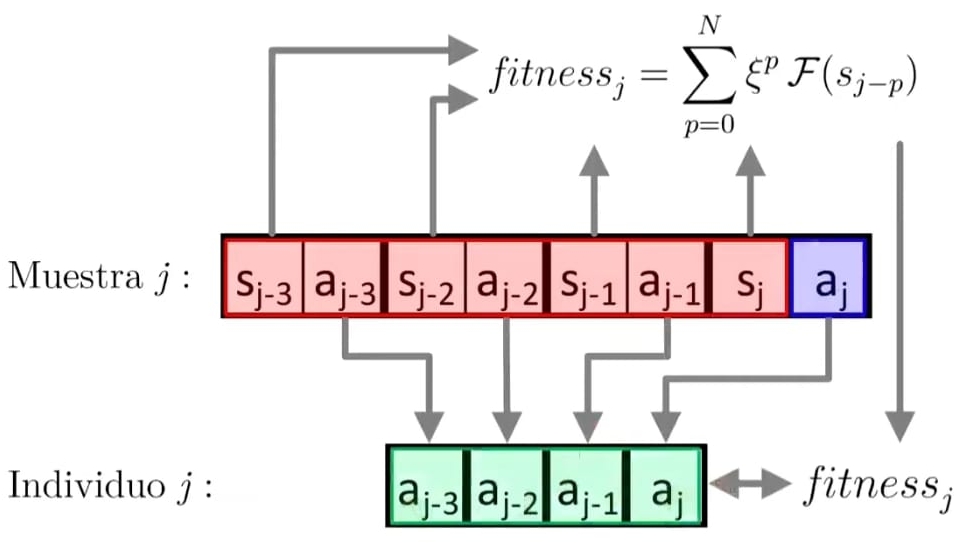
For example, suppose the desired behavior is for the robot to move toward a target point while remaining as level as possible and consuming little energy. The fitness function can encode these objectives by assigning a strong penalty to the distance from the desired target, together with additional penalties for undesirable roll and pitch angles and for excessive electrical current consumption. The distance to the target is given the greatest importance, while the other terms act as secondary objectives that encourage stable and energy-efficient motion.
The genetic algorithm then evaluates different sequences of actuator commands according to this fitness function and progressively searches for sequences that achieve higher fitness. The successful sequences provide examples of which actuator commands are appropriate for particular combinations of sensor measurements and previous actions. These examples are stored in the dataset.
The experimental dataset was collected directly from the physical robot over approximately seven months. This was a largely manual and time-intensive process, since the robot had to repeatedly execute candidate actuator sequences while I monitored the experiments and recorded the corresponding sensor measurements, actuator commands, and resulting behavior. These physical trials provided the data required to evaluate the fitness of different action sequences and gradually build the dataset later used to train the supervised learning model.
Once the dataset has been generated, a supervised learning model is trained on it. The model therefore learns from the control sequences discovered through the genetic search. At runtime, instead of repeatedly running the genetic algorithm to search for the next action, the trained model can directly predict the actuator command from the current and recent sensor-actuator history.
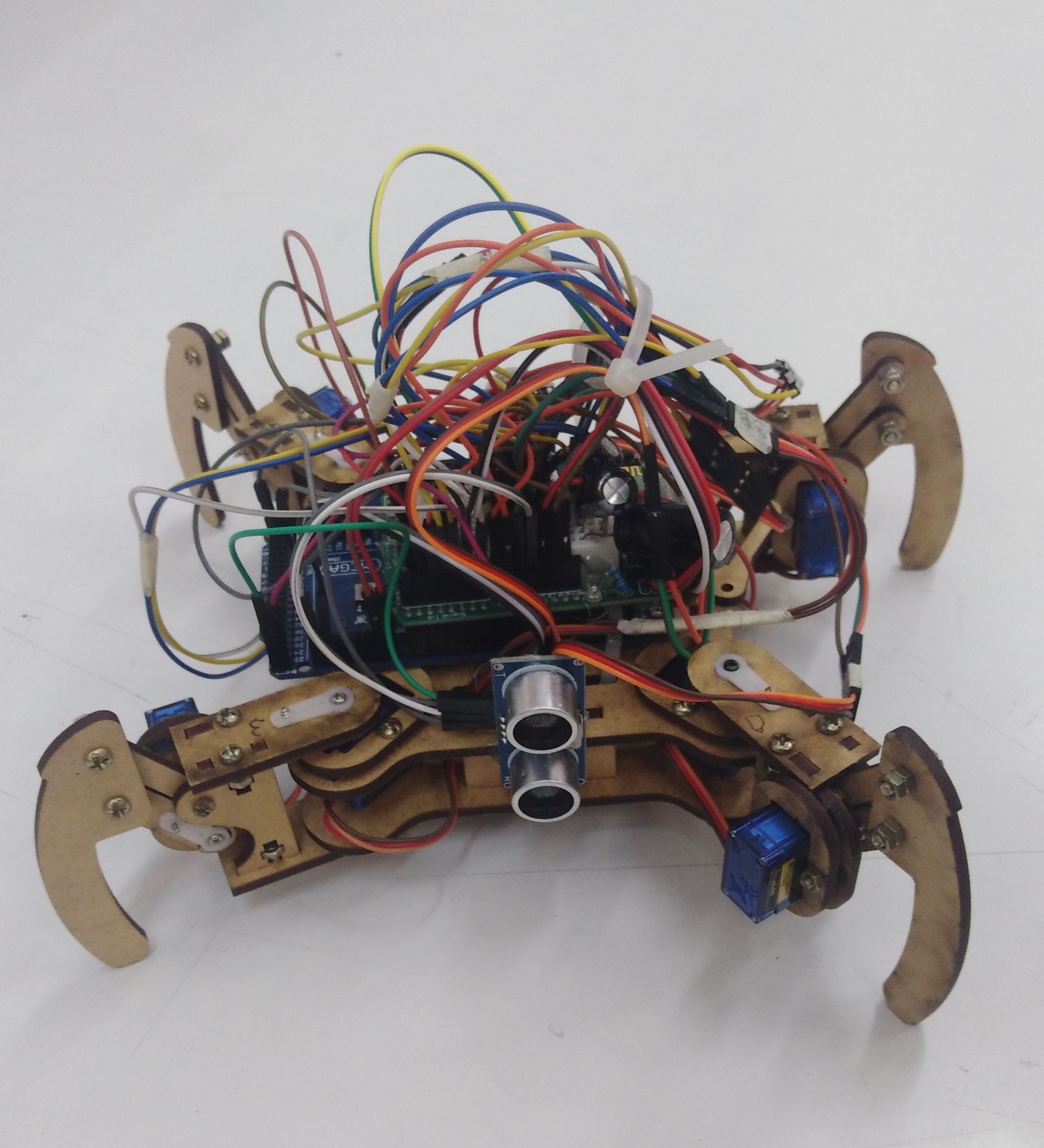
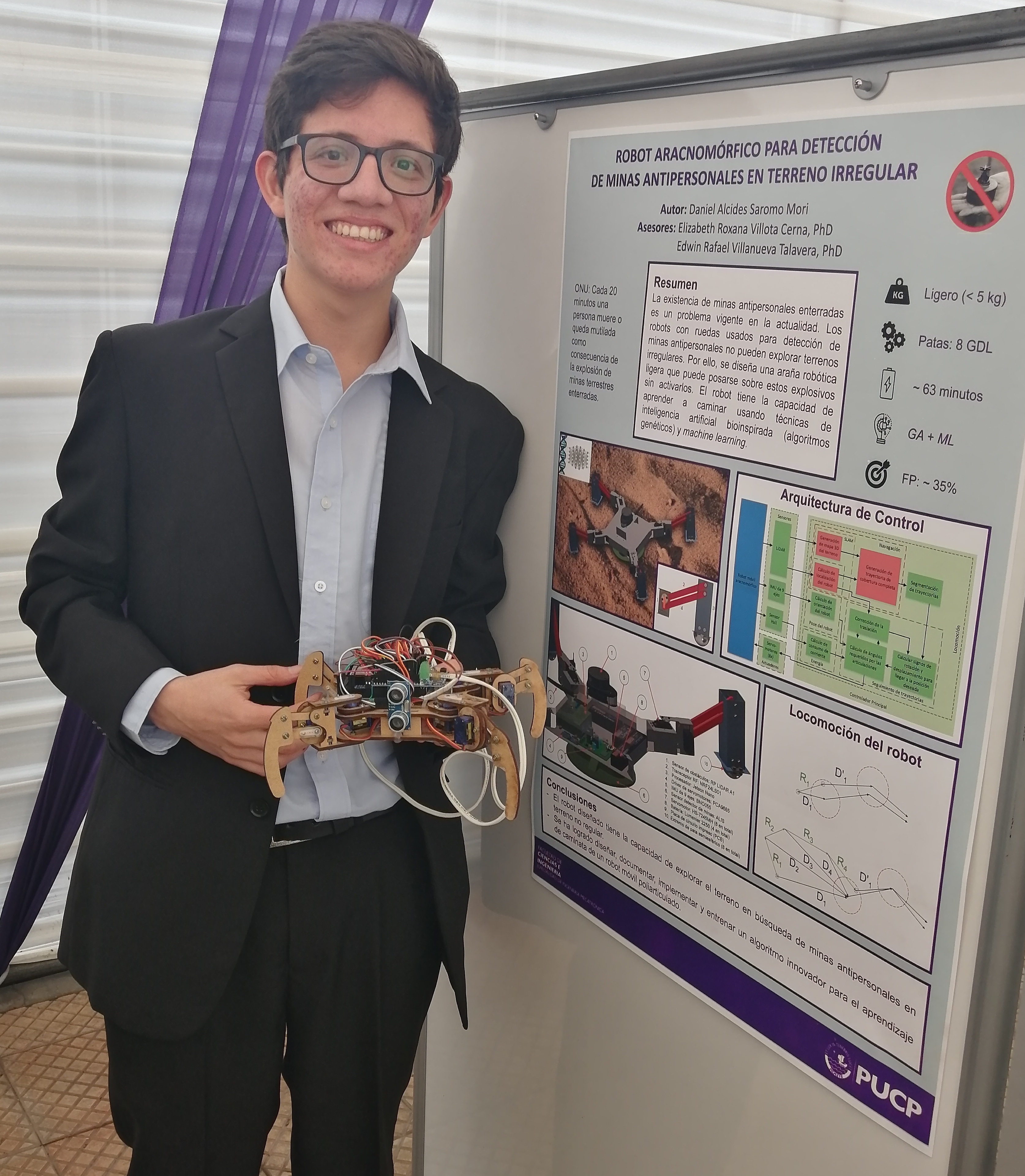
I obtained my Bachelor’s degree on September, 2019. After that, my thesis was improved and then presented to obtain my Professional Degree of Mechatronics Engineer (Ing. degree) on November, 2020.
My thesis received the following national and international awards:
- Best bachelor’s thesis and poster presentation at the PUCP Mechatronics Workshop of the semester 2019-1.
- Innovation Recognition Award at the International Mechanical Engineering Congress & Exposition (IMECE) 2019, which was celebrated in Utah, USA.
- Extraordinary Support Funding for Undergraduate Research Thesis.
- Degree thesis unanimously awarded by the tribunal with the qualification of outstanding.
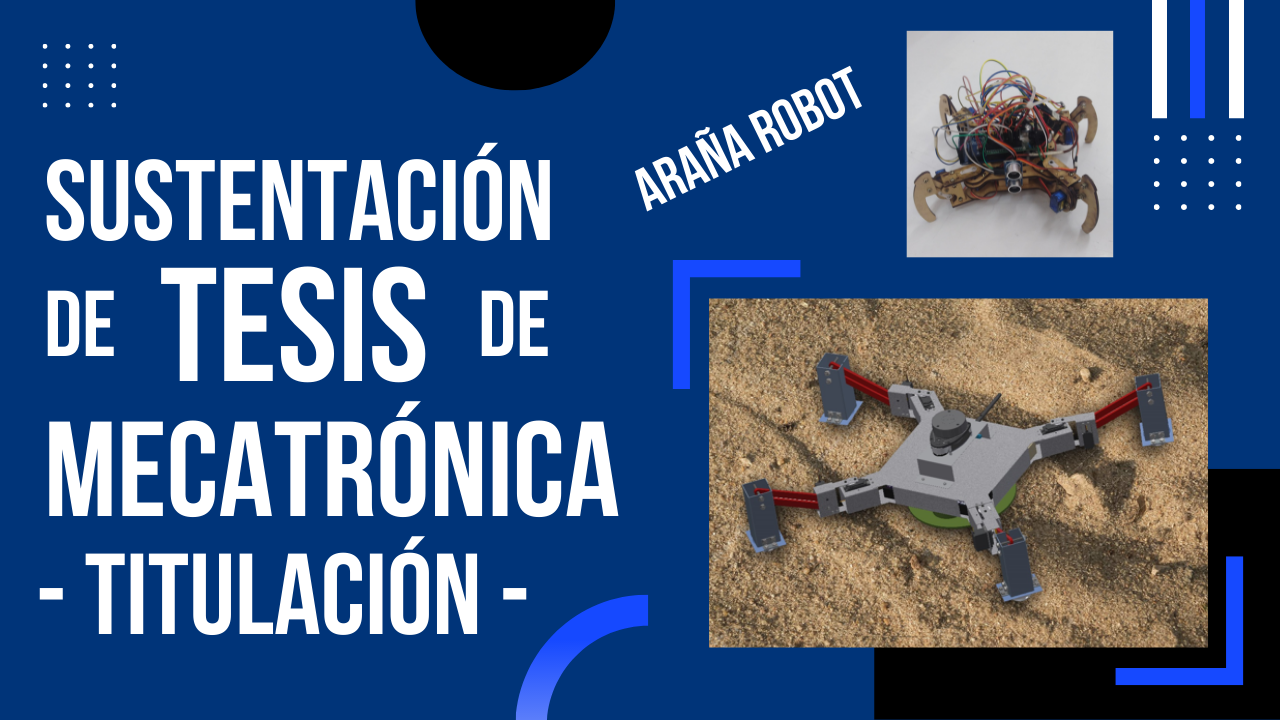
You can watch here the defense of my professional degree thesis.
Publication resources